How Old Is the Sun and How Long Will It Last?
Look up at the sky on a clear day, and you’re staring at a cosmic engine that has powered our planet for eons. But have you ever wondered exactly when its clock started ticking? Here I’m talking about what is the age of sun The Sun is about 4.6 billion years old and has roughly 5 billion years of normal life remaining.
How big the sun really is?
The Sun is about 1.4 million kilometres in diameter, making it roughly 109 times wider than Earth.
Size by the Numbers:
• Diameter: 1,392,700 kilometres.
• Volume: 1.3 million Earths could fit inside it.
• Mass: 333,000 times heavier than Earth.
• Total Mass: Accounts for 99.8% of the entire solar system’s mass.
How Do Scientists Know about its age?
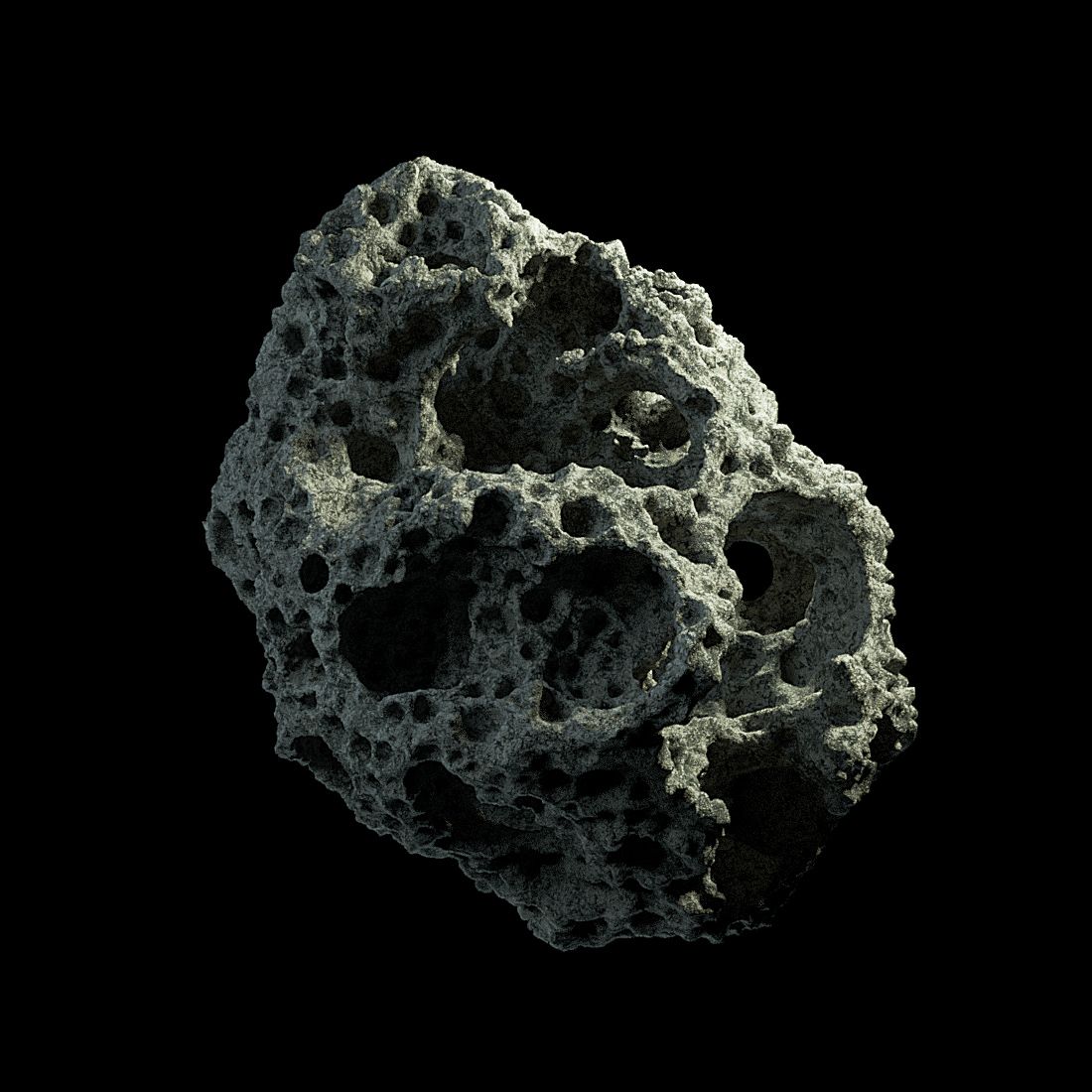
Scientists know the Sun is about 4.6 billion years old primarily by using radiometric dating on the oldest meteorites in the solar system, combined with helioseismology and advanced computer models of stellar evolution. Because the Sun and the planets formed at the same time from the same cloud of gas and dust, dating these pristine space rocks gives us the exact birth date of our entire solar system.
1. Radiometric Dating of Meteorites
Scientists calculate the age of the solar system by measuring radioactive decay in space rocks.
• Pristine Records: Earth rocks melt and recycle due to plate tectonics, destroying original data. Meteorites remain unchanged since the solar system formed.
• Uranium-Lead Clock: Scientists measure the ratio of unstable uranium isotopes to stable lead atoms.
• Known Decay Rates: Uranium decays into lead at an unchanging, mathematically precise rate known as a half-life.
• The Result: The oldest meteorites, called Calcium-Aluminum-rich Inclusions (CAIs), consistently date back to 4.567 billion years.
2. Helioseismology (Sun Quakes)
Scientists track internal sound waves to look inside the Sun, much like using ultrasound on a human body.
• Core Changes: As the Sun ages, it fuses hydrogen into helium, altering the density and composition of its core.
• Sound Speed: Sound waves travel at different speeds through helium than through hydrogen.
• The Result: By measuring these acoustic vibrations, scientists calculate how much hydrogen the core has consumed, confirming an age of roughly 4.6 billion years.
3. Stellar Evolution Models
Astrophysicists build complex computer models based on the fundamental laws of physics to track how stars change over time.
• Tracking Attributes: Models track mass, brightness (luminosity), surface temperature, and chemical composition.
• Matching Data: Scientists input the Sun’s current brightness and mass into the equations.
• The Result: The simulation tracks backwards to see how long a star with our Sun’s exact properties would take to reach its current state, yielding an identical match of 4.6 billion years.
What is the sun made of?
The Sun is made almost entirely of hydrogen (73%) and helium (25%), with the remaining 2% consisting of heavier elements like oxygen, carbon, neon, and iron.
Chemical Composition by Mass:
• Hydrogen: 73% (the primary fuel for nuclear fusion).
• Helium: 25% (created by burning hydrogen).
• Oxygen: 0.77%
• Carbon: 0.29%
• Iron: 0.16%
• Other Elements: 0.78% (including neon, nitrogen, silicon, and magnesium).
The State of Matter: Plasma
The Sun is not a burning ball of gas in the traditional sense.
• Extreme Heat: Temperatures reach millions of degrees.
• Ripped Atoms: Electrons are stripped away from their atomic nuclei.
• Superheated Plasma: This creates a moving soup of electrically charged particles.
Past, Present, and Future of sun
The Birth:
The birth of our Sun began 4.6 billion years ago when a massive interstellar cloud of gas and dust, known as the solar nebula, collapsed under its own gravity. This cosmic collapse kicked off the formation of the entire solar system
1. The Initial Trigger
- The Giant Molecular Cloud: A cold, dense cloud of hydrogen and dust spanned light-years across space.
- The Cosmic Shock: A nearby supernova (a dying exploding star) likely sent shockwaves through the cloud.
- The Destabilization: This compressed the gas, causing gravity to take over and pull the matter inward.
2. The Gravitational Collapse
- Shrinking and Spinning: As the nebula collapsed, it shrank and began to spin faster, much like an ice skater pulling in their arms.
- Flattening into a Disc: Centrifugal forces flattened the outer parts of the spinning cloud into a spinning pancake shape called a protoplanetary disc.
- Gathering Mass: Gravity pulled 99.8% of all the matter directly into the center of this disc.
3. Ignition: Becoming a Protostar
- The Protostar Phase: The center grew incredibly dense, generating immense friction and pressure.
- The Temperature Spike: Temperatures at the core soared to millions of degrees Celsius.
- Nuclear Ignition: When the core reached roughly 15 million °C, hydrogen atoms began fusing into helium, releasing bursts of energy and officially switching on the Sun.
[Dense Nebula Cloud] ➔ [Supernova Shockwave] ➔ [Gravitational Collapse] ➔ [Spinning Protoplanetary Disc] ➔ [Core Ignition (Sun is Born)]
The golden Age
The Sun is currently living out its stable “Golden Age,” sitting comfortably halfway through its lifespan as a middle-aged Yellow Dwarf star. Astronomers formally classify the Sun as a G-type main-sequence star (G2V), which represents the most stable and predictable phase of its entire existence.
Why "Yellow Dwarf"?
- The Name Myth: Despite the nickname, the Sun actually emits all colors of light and is pure white when viewed from space.
- Atmospheric Filter: Earth’s atmosphere scatters shorter wavelengths of light (blue), causing the Sun to look yellow to our eyes on the ground.
- The “Dwarf” Label: Compared to rare cosmic giants like Betelgeuse, our Sun is relatively small, though it is larger than 90% of the stars in the Milky Way.
The Future: Will it explode?
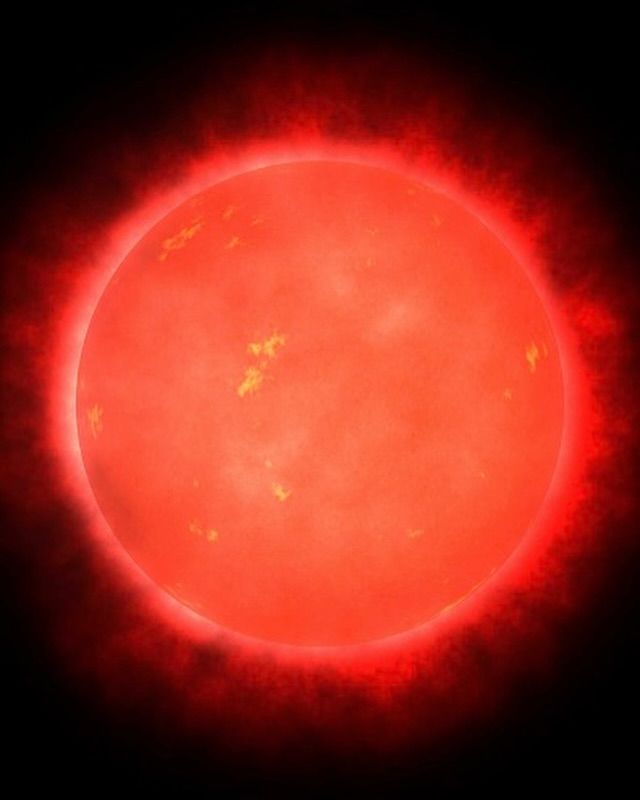
The Sun will never explode because it lacks the massive size required to trigger a supernova. Instead, in about 5 billion years, it will slowly expand into a bloated Red Giant before gently shedding its outer layers and leaving behind a cooling core called a White Dwarf.
*[Now: Golden Age] ➔ [5B Years: Expands to Red Giant] ➔ [6B Years: Sheds Outer Layers] ➔ [Trillions of Years: Fades as White Dwarf]*